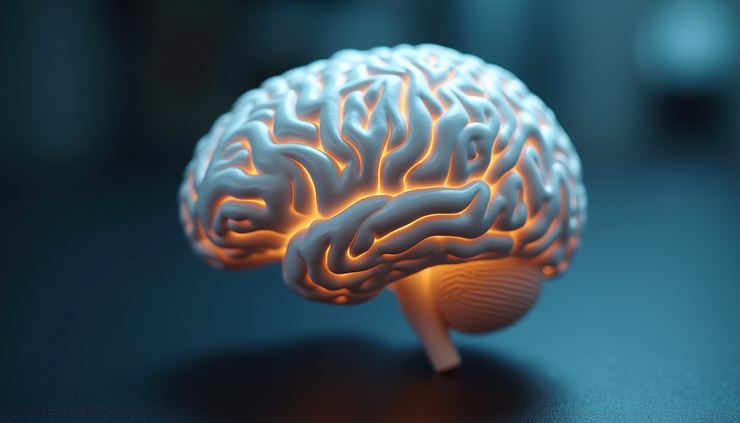
The latest scientific data are encouraging: scientists have found that the drug LSD can have a beneficial effect on the white matter of the brain in people suffering from depressive states. The key finding of the study was the discovery of increased organization of the white matter, which had a positive impact on the patients’ emotional well‑being over many weeks.
How LSD transforms the brain in depression
As part of clinical observations, experts used diffusion magnetic resonance imaging to analyze the state of the brain in thirty‑five volunteers. They underwent an examination before the start of the course and shortly after the repeated use of the drug. Special attention was paid to the indicator reflecting the direction of fluid movement along the nerve fibers. It is this parameter that usually decreases in depressive disorders, signaling disorganization and disruptions in intercellular connections.
The data obtained demonstrated that significant changes occurred in participants who received high doses of LSD. Their indicators improved in key brain areas responsible for emotion control and information integration between different regions. Reorganizations were noted in such areas as the internal and external capsules, sagittal interstices, the fornix, and the striatum terminalis — these zones traditionally ensure emotional balance and stable mental functioning.
The effect of LSD and the duration of improvements
It is noteworthy that the initial brain characteristics differed among all participants, yet pronounced positive changes were observed only in those who received high doses of the drug. Moreover, the severity of depression or age, as well as gender, had virtually no impact on the body’s final response — the result was determined directly by the effect of LSD. This underscores the universality of the identified phenomenon and opens up new prospects for working with severe psychological conditions.
Researchers emphasize that increased organization of white matter is often associated with the brain’s capacity for neuroplasticity — its flexibility and ability to reorganize under the influence of treatment or life circumstances. Active changes in these areas, as the authors note, may indicate the restoration of connections lost during the depressive period, and consequently, the return of emotional stability in patients.
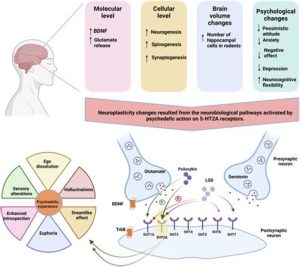
LSD. Research on brain neuroplasticity in depression.
Prospects and significance of structural changes
It is particularly interesting that in the subjects who showed the most pronounced increase in anisotropy indicators after therapy, improvements in mood persisted even several months after the course ended. Moreover, the relationship between the degree of changes in the white matter and the duration of the positive effect was particularly strong with longer‑term use of the drug.
Adding to the scientific value is the fact that the observed changes were not limited to the internal structure of the brain. It was noted that the renewal of brain connections is directly associated with clinical improvement in well‑being, not just with subjective experiences at the time of taking the drug. Thanks to this, scientists conclude that LSD has significant potential as a therapeutic agent for chronic forms of depression, where standard methods prove to be ineffective.
LSD: monitoring possibilities and a new future for therapy
The study also suggests the possibility of using the level of anisotropy in white matter as a potential biomarker of the effectiveness of depression treatment. This discovery could provide a powerful impetus for the creation of personalized therapy programs, where the doctor will be able to predict the patient’s response in advance and adjust the course if necessary. In the long term, this approach will make it possible to avoid long and not always productive searches for effective treatments for each individual person.
The results obtained demonstrate great promise for the scientific and clinical development of therapy methods using psychedelic compounds. Their ability to enhance brain neuroplasticity and maintain patients’ emotional state even after discontinuation is characterized by strong positive dynamics.
Precautions and further steps
Despite the encouraging trends, scientists remind us that to date, only a small number of people have participated in such studies, and diffusion imaging has its limitations. For the final verification of the conclusions, new, larger‑scale randomized trials with placebo control are needed to confirm the reliability and reproducibility of the effect.
However, it is already becoming clear that scientific research in the field of psychedelic drugs and their impact on neuroplasticity opens the door to the development of new, effective approaches to the treatment of depressive disorders. This optimistic view of the future gives hope that, in the near future, methods for restoring brain connections will become available to a larger number of people, restoring their joy of life and stable emotional health.
About The Author